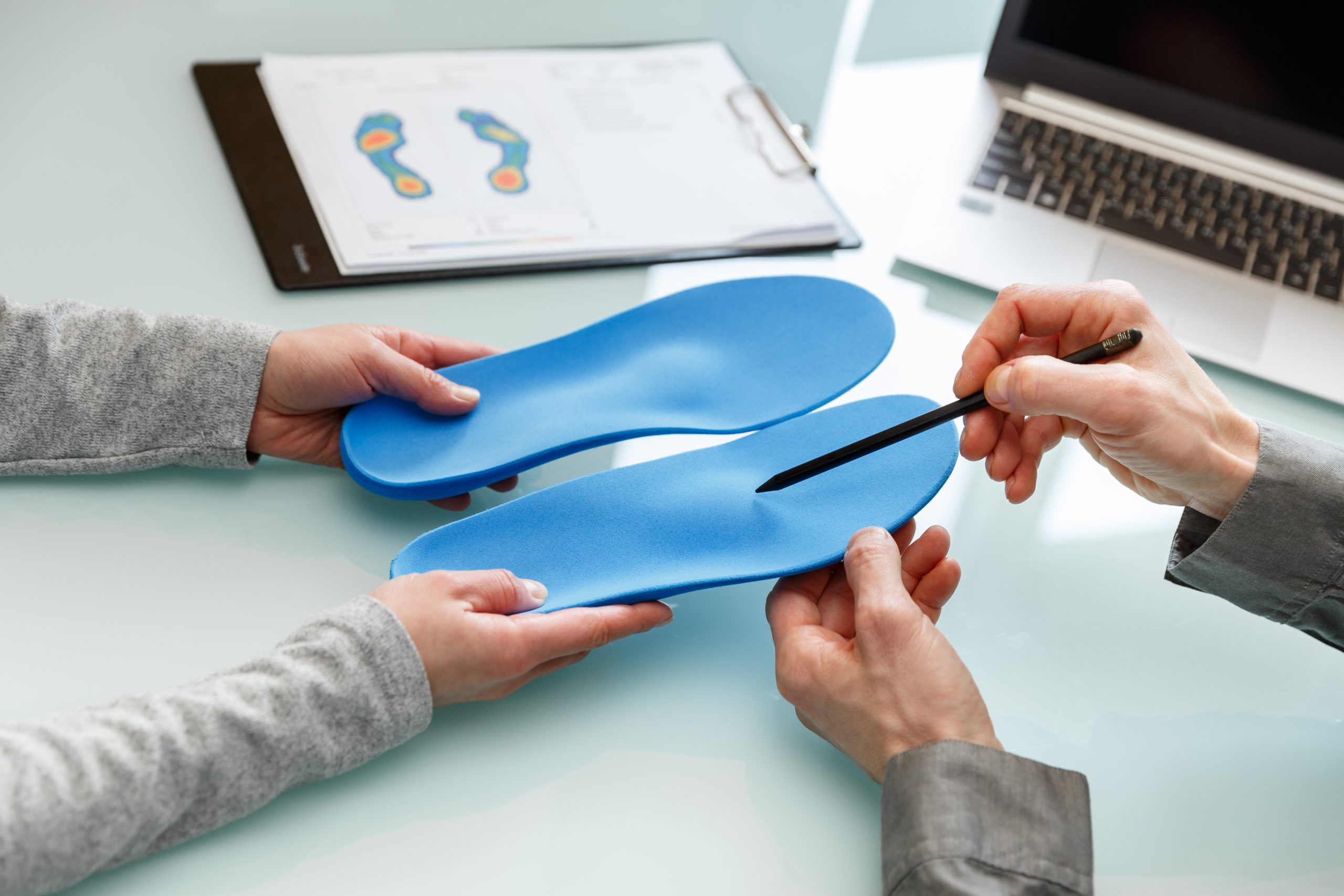
Over-the-counter insoles work well for mild discomfort and cushioning, while custom orthotics are built from a mold of your own feet to correct specific problems your podiatrist has diagnosed. Drugstore inserts are a fine starting point for tired or achy feet, but custom orthotics are the better choice when you have a persistent condition, an unusual foot shape, or pain that store-bought inserts have not fixed.
Below, we break down how each option works and how our podiatrists at Elite Foot & Ankle Associates help patients across the Portland metro area decide which one fits their needs.
Over-the-counter (OTC) insoles are mass-produced inserts you can buy at pharmacies, sporting goods stores, and online. They come in standard sizes and styles – cushions, arch supports, heel pads, and full-length inserts made from gel, foam, or plastic.
Because they fit the “average” foot, they add cushioning and mild support that can feel great after a long day. But they are not tailored to your exact arch height, foot width, or gait pattern, so they cannot correct significant biomechanical imbalances.
Custom orthotics are prescription medical devices created from a precise 3D impression or scan of your feet. Following a comprehensive podiatric evaluation, they are fabricated to meet your unique structural needs – designed to support, align, prevent, or correct deformities.
Can be rigid, soft, or a blend, depending on what your feet need
Realign your foot’s structure and reduce strain on ligaments and tendons
Redistribute pressure away from painful areas
Over-the-Counter: Generic sizing means arch support may be too high, too low, or in the wrong place – an improper fit can sometimes worsen a problem.
Custom: Molded to your foot, matching every curve, arch, heel, and pressure point exactly.
Over-the-Counter: General cushioning and mild arch support; mainly absorbs shock rather than correcting alignment.
Custom: Targeted, functional correction – holding a flat arch in position or offloading a painful area, which matters greatly for flat feet or a high arch.
Over-the-Counter: Comfort and everyday wear; for minor, non-specific foot fatigue.
Custom: Prescribed to treat diagnosed conditions such as heel pain, Achilles tendinitis, bunions, hammertoes, sesamoiditis, and peripheral neuropathy.
Over-the-Counter: Break down within a few months, losing cushioning and support.
Custom: Built from high-grade materials like graphite or advanced thermoplastics to last for years – a smarter long-term investment for chronic issues.
Over-the-Counter: You choose based on packaging, with no professional diagnosis.
Custom: Begins with a thorough exam, gait analysis, and sometimes X-rays to identify the exact cause of your pain – the step that separates medical treatment from a consumer product.
Yes. Custom orthotics are a proven, well-established non-surgical treatment. By controlling abnormal motion and spreading out pressure, they reduce stress on the joints, ligaments, and tendons of the feet, ankles, knees, hips, and lower back. Orthotics are frequently paired with advanced treatments, such as shockwave or laser therapy, to address stubborn heel and tendon problems. Custom and OTC orthotics are often included in recovery packages after foot procedures.
The decision comes down to your symptoms, foot structure, and how long the trouble has lasted. You are more likely to benefit from custom orthotics if you have:
Chronic heel pain or plantar fasciitis that has not improved with rest – orthotics can add a heel lift or deep heel cup to reduce tension on the plantar fascia
Flat feet or very high arches that need support and stability
Bunions, hammertoes, or a tailor’s bunion – orthotics can slow progression, relieve joint pressure, and may delay surgery
Achilles tendinitis or recurring tendon strain
Diabetes or peripheral neuropathy
If your foot pain is ongoing, associated with a diagnosed condition, or interfering with work and activities, custom orthotics are often worth the investment. Because they correct the underlying problem and last for years, they can help you avoid costlier treatments, prevent recurring injuries, and improve your quality of life.
Yes. For mild, occasional discomfort – like sore feet after a long shift or a day of walking – a quality OTC insole is a sensible first step. But if your pain is sharp, lingers past a few weeks, keeps coming back, or gets worse, that is your cue to see a podiatrist. Using an OTC insert for a serious problem is like putting a bandage on a wound that needs stitches.
When considering custom orthotics vs. over-the-counter options, the right choice depends on your needs: OTC insoles are convenient for minor aches, while custom orthotics offer targeted, long-lasting relief for specific conditions. Choose the option that supports your foot health and lifestyle.

About the Author
Daniel McManus, DPM
Check Your Insurance Coverage
Testimonials
I can't recommend them enough!

July 13, 2026