

Diabetic foot care is essential because diabetes can quietly damage the nerves and blood vessels in your feet, making even small injuries slow to heal and more likely to become serious. Our podiatrists at Elite Foot and Ankle explain what to watch for, what to do each day, and when to get help.
High blood sugar over time harms two systems your feet depend on: nerves and circulation. When nerves are damaged, you may not feel a pebble in your shoe, a burn from hot water, or a blister from new shoes. Narrowed or damaged blood vessels deliver less oxygen to your feet, so cuts and sores heal more slowly and infections are harder to fight. Together, these changes mean a minor injury can go unnoticed and then fail to heal, leading to serious infections that can threaten the foot itself.

Peripheral neuropathy is nerve damage that often starts in the toes and moves up the feet. Common signs include tingling, burning, numbness, or a “pins and needles” feeling. Some patients feel sharp pain, while others feel almost nothing at all.
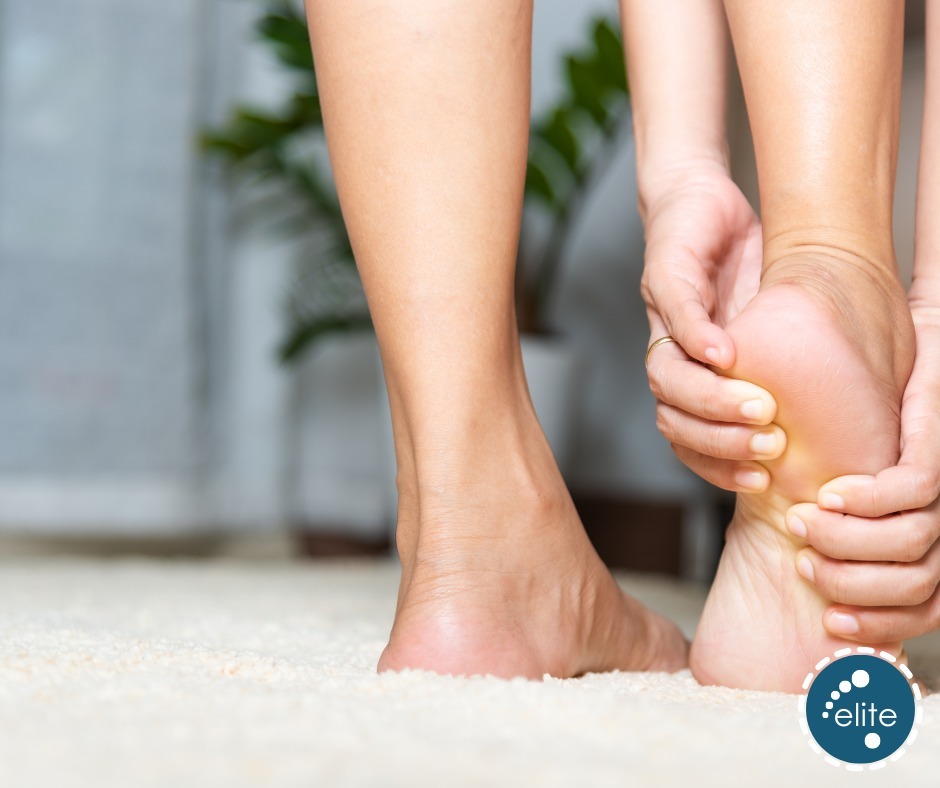
We offer diabetic neuropathy screening and assessment to find nerve changes early. For patients living with neuropathy symptoms, our team also provides the NervRenew neuropathy package, which combines regenerative medicine and light-based therapies.
Peripheral vascular disease narrows the arteries that carry blood to your legs and feet. Signs include cramping in the calves when walking, cold feet, shiny skin, hair loss on the toes or legs, and weak pulses in the feet. This condition raises the chance that a wound will not heal on its own.
Even without a formal vascular diagnosis, diabetes can reduce blood flow to the small vessels in the skin. Poor blood supply can make feet look pale or bluish. Skin may become thin and fragile. Healing from even a minor scrape can take weeks rather than days.
Ingrown toenails occur when the edge of a nail grows into the skin. For someone with diabetes, this opening can let bacteria in.
Corns and calluses form where shoes rub or where pressure builds. Thick calluses can hide sores forming underneath. Never cut corns or calluses yourself or use over-the-counter acid pads. These products can burn healthy skin and create a wound.
Athlete’s foot is a fungal infection that causes itching, peeling, and cracks between the toes. Those cracks give bacteria an easy way in. Fungal toenail infections can also thicken nails, making them harder to trim safely. Treating these infections early keeps the skin barrier intact.
Charcot foot is a serious condition in which bones in a numb foot weaken and break. Because the foot does not hurt much, patients keep walking on it. Over time the foot can collapse and change shape. Warning signs include sudden swelling, redness, and warmth in one foot, often with little or no pain. Early diagnosis and offloading the foot are key.
Look at the tops, bottoms, sides, and heels of both feet. Check between every toe. Look for:

Cuts, blisters, or scrapes
Red spots, swelling, or warm areas
Changes in skin color
Cracks in dry skin, especially on the heels
Ingrown or discolored toenails
Drainage or an unusual odor
If you cannot see the bottoms of your feet, use a hand mirror or ask a family member to help. Run your hands over your feet to feel for heat or lumps you might not see.
Check your feet once a day at the same time so it becomes a habit. Many patients find bedtime works well, after shoes and socks come off. Use good lighting. If you notice anything new, compare both feet. A spot that is warmer or more swollen than the same spot on the other foot deserves attention.
Wash your feet daily in lukewarm water with mild soap. Test the water with your elbow or a thermometer first, since neuropathy can keep you from sensing hot water. Do not soak your feet for long periods. Soaking can dry out the skin and lead to cracks.
Pat your feet dry with a soft towel. Pay close attention to the spaces between your toes, where moisture can lead to fungal infections.
Apply a thin layer of moisturizer to the tops and bottoms of your feet to prevent cracking. Do not put lotion between your toes.
Trim toenails straight across and smooth sharp edges with a file. Do not cut into the corners. If your nails are thick, curved, or hard to reach, or if you have neuropathy or poor circulation, let a podiatrist handle it.
Shoes protect feet that may not sense injury. Follow these guidelines:
Wear shoes and socks at all times, even indoors.
Choose shoes with a roomy toe box, firm support, and no seams that rub.
Shop for shoes later in the day, when feet are slightly swollen.
Break in new shoes slowly and check your feet after wearing them.
Shake out and feel inside each shoe before putting it on.
Pick clean, dry, seamless socks that do not squeeze your legs.
Custom orthotics can spread pressure more evenly across the bottom of the foot. This helps reduce calluses and the sores that can form beneath them. Our podiatrists can assess whether orthotics make sense for your feet.
Everyone with diabetes should have a foot exam at least once a year. Patients with neuropathy, poor circulation, foot deformities, or a history of wounds often need visits more often.
During an exam, a podiatrist checks sensation, circulation, skin, nails, and foot structure. They look for pressure points and early changes you may miss at home. Our Podiatrists includes Trevor Haynes, Dr. Tyler Belnap, Dr. Daniel McManus, Dr. Ravneet Sandhu, and Dr. Tavin Morgan. They see patients across six offices in the Portland area.
Contact a podiatrist right away if you notice:
A sore or blister that does not start healing within a few days
Redness, warmth, or swelling that is spreading
Drainage, pus, or a foul smell
A change in foot shape or sudden swelling in one foot
Skin that turns black, blue, or very pale
Fever or chills along with a foot problem
Do not wait for pain. With neuropathy, a serious infection may cause little discomfort.
If you find a cut or blister, clean it gently with mild soap and water. Cover it with a clean, dry bandage. Do not pop blisters. Avoid strong antiseptics that can damage healing tissue.
Keep weight off the area as much as you can. Check it every day. If it does not improve quickly, see a podiatrist. Wounds that need care may require debridement, which is the removal of unhealthy tissue so the wound can heal. We provide wound debridement in our offices. It supports healing and helps your body fight infection.
Other steps that help:
Do not smoke, since smoking narrows blood vessels.
Stay active with safe activities such as walking or swimming, with your care team’s approval.
Treat athlete’s foot and nail fungus promptly.
Keep regular foot appointments, even when your feet feel fine.
The Importance of Diabetic Foot Care: Essential Tips is to check your feet every day, keep them clean and protected, and see a podiatrist regularly. Catching small problems early helps you stay active and keeps minor injuries from becoming serious ones.