
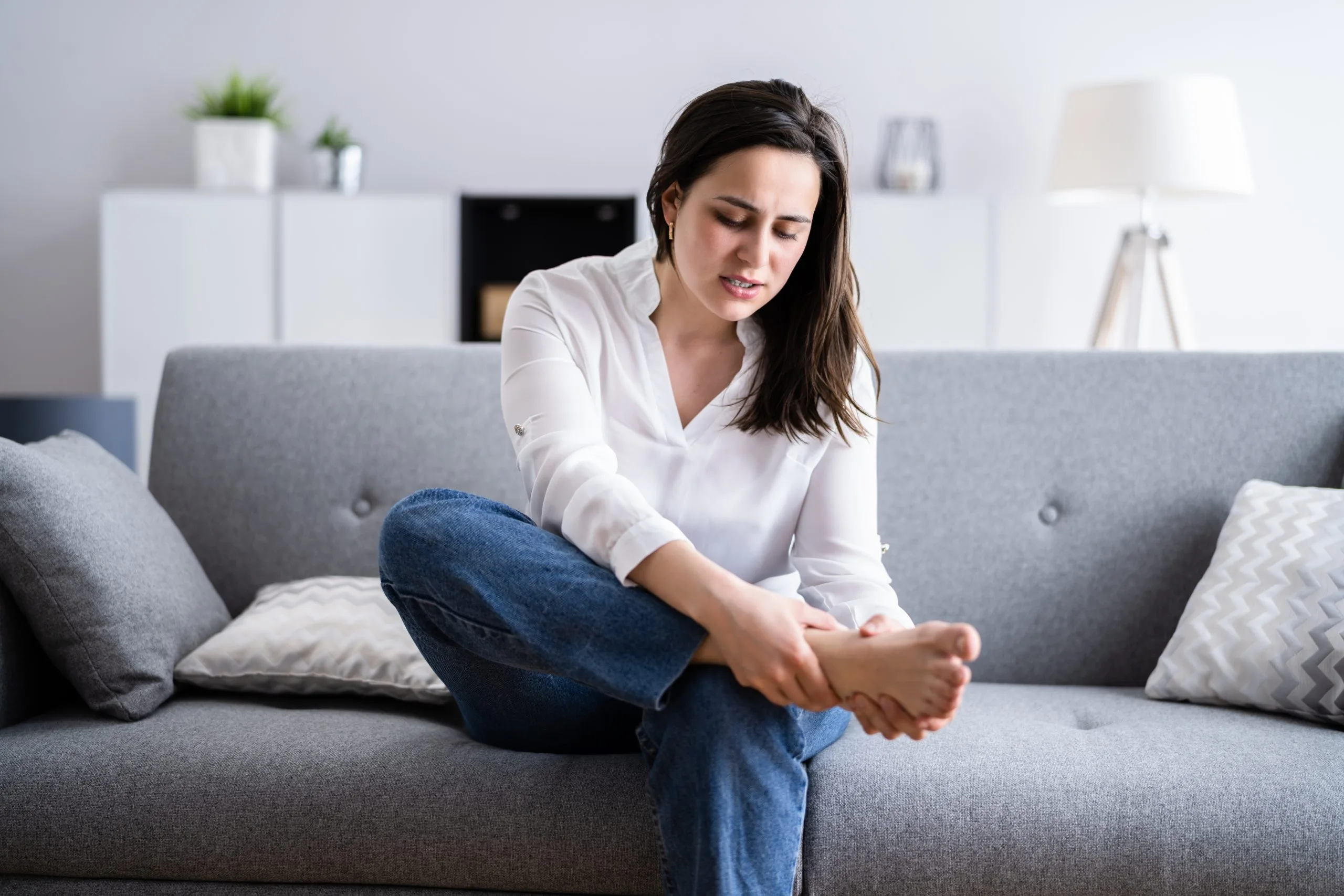
If every step in your favorite shoes suddenly feels like you’re walking on gravel or bare bone, thinning fat pads are likely to blame. The good news is that this cushioning loss can be treated with targeted, minimally invasive options like fat pad rejuvenation, which restores padding under the heel or ball of the foot so you can get back to walking, standing, and living without wincing with every step.
Your feet come with built-in shock absorbers. Underneath the skin on your heel and the ball of your foot sits a specialized layer of fat, held together by tiny fibrous strands, that cushions every step you take. It’s not the same as the fat elsewhere on your body – it’s denser, more elastic, and designed specifically to absorb impact.
Fat pad atrophy happens when that cushioning breaks down. The padding thins, the fibrous structure loosens, and the natural shock absorption you’ve relied on your whole life starts to disappear. Without it, the bones in your foot take the full brunt of every step, and that pressure has nowhere to go but straight into your nerves and joints.
Fat pad atrophy is often mistaken for arthritis or a stress fracture because the pain can feel similar. But the cause is different, and it tends to build for one or more of these reasons:
Age. After your mid-40s, the fibrous network that holds fat in place naturally weakens. This is the most common driver of atrophy.
Years of pressure. Decades of walking, running, or standing on hard surfaces wear down the padding, much like a tire’s tread.
High heels and unsupportive shoes. Footwear that pushes pressure into the ball of the foot accelerates thinning in that area specifically.
Diabetes and poor circulation. Reduced blood flow can affect how well fat tissue regenerates and repairs itself.
Rheumatoid arthritis and other inflammatory conditions. Chronic inflammation can damage the fibrous structure that holds the fat pad together.
Steroid injections. Repeated cortisone shots in the same area can thin the surrounding tissue over time.
Sudden weight loss. Losing fat pad volume along with body fat elsewhere can leave the foot underprotected.
Fat pad atrophy tends to announce itself gradually, then all at once. Common signs include:
A burning or aching pain in the heel or ball of the foot, especially after standing or walking
A sensation of walking directly on bone, pebbles, or a bruise that never heals
Pain that worsens on hard flooring, like tile or concrete, and eases somewhat on soft surfaces
Visible thinning or flattening of the padding under the heel or forefoot
New calluses or corns forming where pressure has concentrated
Discomfort that gets progressively worse throughout the day
If any of this sounds familiar, it’s worth having a podiatrist take a look rather than assuming it’s simply “sore feet.” Left unaddressed, thinning pads can shift pressure onto joints and bones that weren’t built to handle it, sometimes leading to secondary issues like heel pain or stress-related injuries.
Diagnosis usually starts with a physical exam. Your podiatrist will press on the affected area, check where the pain is concentrated, and often ask you to walk so they can watch how your foot strikes the ground. In many cases, imaging such as ultrasound or X-ray helps confirm how much cushioning has been lost and rule out other causes, such as fractures or nerve compression.
Getting an accurate diagnosis matters because fat pad atrophy is often mistaken for plantar fasciitis, metatarsalgia, or nerve-related pain. Treating the wrong problem wastes time and money, which is exactly why a proper evaluation should come first.
For mild cases, simple changes can relieve a surprising amount of pressure:
Switching to cushioned, supportive footwear
Adding gel heel cups or metatarsal pads
Custom orthotics designed to redistribute weight away from thinned areas
Reducing time spent barefoot on hard surfaces
These steps won’t rebuild lost tissue, but they can meaningfully ease day-to-day discomfort while you decide on a longer-term plan.
When conservative measures aren’t cutting it, fat pad rejuvenation offers a more direct fix. This in-office procedure uses a regenerative injectable material to rebuild the cushioning that’s been lost, rather than just masking the pain. The treatment typically takes 15 to 30 minutes, uses a local anesthetic for comfort, and most patients are back to normal activities within a day or two. Results commonly last anywhere from several months to over a year, depending on activity level and lifestyle.
This approach fits well alongside other regenerative medicine options for people dealing with broader tissue damage or slow healing.
Pain and inflammation around thinning fat pads can also respond well to non-injectable therapies. Shockwave therapy uses focused sound waves to stimulate healing and reduce chronic pain, and it’s often paired with rejuvenation treatments for a more complete recovery plan.
Surgery is rarely the first option for fat pad atrophy, but for severe or structural cases — especially when bone deformities contribute to pressure points — a podiatric surgeon may recommend a procedure to correct the underlying issue. This is typically reserved for situations where cushioning restoration and conservative care haven’t resolved the problem.
Fat pad rejuvenation is most often recommended for people who:
Feel like they’re walking on bones, pebbles, or a bruise that won’t heal
Deal with chronic heel or ball-of-foot pain that hasn’t responded to shoe changes or orthotics
Have developed painful calluses from uneven pressure distribution
Want a minimally invasive option before considering more involved procedures
You can’t stop the clock on aging, but you can slow how fast your fat pads thin out. Wearing properly cushioned shoes, managing conditions like diabetes closely, avoiding unnecessary repeat steroid injections, and maintaining a stable weight all help preserve what padding you have left. Regular check-ins with a podiatrist also catch early thinning before it turns into daily pain.
Fat pad atrophy is common, but it isn’t something you have to just live with. At Elite Foot & Ankle Associates, our podiatrists diagnose the cause of your foot pain and build a treatment plan around it, whether that means custom orthotics, fat pad rejuvenation, or a combination of regenerative therapies. With six locations across the Portland Metro area and same- and next-day appointments available, relief is closer than you think.
Request an appointment or call (503) 639-8107 to get started.

About the Author
Daniel McManus, DPM
Check Your Insurance Coverage
Testimonials
I can't recommend them enough!

September 15, 2026