

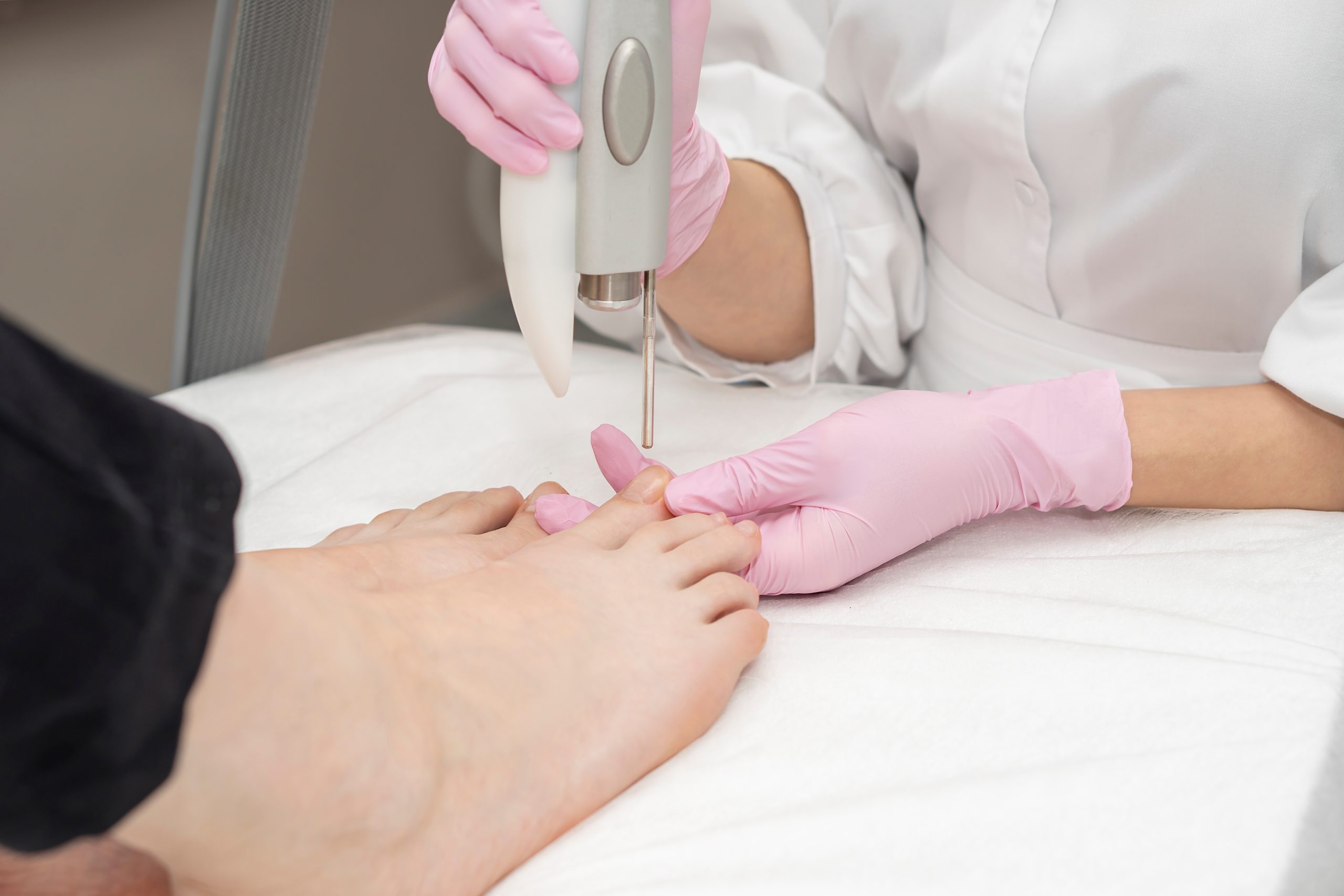
Laser nail fungus removal is one of the most effective non-oral treatments available today, with clinical studies showing clearance rates between 60% and 80% depending on the laser type, severity of infection, and patient compliance with aftercare. If you’ve been hiding your toes in closed shoes and wondering whether laser treatment actually works, the short answer is: it works well for many people — especially when combined with a structured treatment plan.
Nail fungus — medically called onychomycosis — affects roughly 10% of the general population. It’s stubborn, slow to respond to home remedies, and often returns after oral medication is stopped. Laser therapy has emerged as a promising alternative that avoids the liver-related side effects of antifungal pills and the limited penetration of topical creams.
Laser nail fungus removal is a non-invasive procedure designed to treat onychomycosis, a condition that can cause nails to become yellow, thick, crumbly, and separated from the nail bed. Unlike topical treatments that struggle to penetrate thick, damaged nails, laser energy reaches the infection at its source — in the nail bed — without requiring you to swallow medication.
The principle behind laser treatment is selective photothermolysis. The laser emits a specific wavelength of light that is absorbed by the pigment within the fungal cells beneath and within the nail. This absorption generates heat at a precise level — enough to destroy the fungal organisms and their spores while leaving surrounding tissue unharmed.
Because the laser is precisely calibrated to target the fungus, our podiatrists can address the infection directly where it lives — in the nail bed and matrix — which is exactly why topical treatments often fail to penetrate deep enough to be fully effective. Over a series of sessions, this repeated disruption weakens the fungal colony and allows healthy nail to grow forward from the base.
Because toenails grow slowly (roughly 1 to 1.5 millimeters per month), visible improvement takes time. Most patients begin to notice clearer nail growth within three to six months after starting treatment, and the full nail may take nine to twelve months to grow out completely.
Several laser types have been studied and used for nail fungus treatment:
Nd:YAG lasers (1064 nm wavelength) — The most widely used laser for onychomycosis. This wavelength penetrates deeply through the nail plate and generates targeted heat within the fungal tissue.
Diode lasers — Another common option that operates at wavelengths effective for disrupting fungal cell membranes.
Fractional CO2 lasers — Sometimes used to create micro-channels in the nail plate to improve the penetration of topical antifungal agents applied afterward.
At Elite Foot and Ankle, the Nail Renew Laser Package uses a Class IV laser powerful enough to penetrate the nail plate and eradicate the fungus. Our commitment to incorporating advanced technologies like laser and Shockwave Therapy is a core part of our practice philosophy, allowing us to offer patients in the Portland metro area treatment options that are not widely available elsewhere.
When patients ask, “How effective is laser nail fungus removal?” they are often looking for hope after trying other methods without success. The evidence and clinical outcomes show that laser therapy is a powerful and viable option for achieving clear nails.
Published research on laser nail fungus removal reports clinical improvement rates ranging from 60% to 80%. A 2014 meta-analysis in the Journal of the American Podiatric Medical Association found that Nd:YAG laser treatment produced significant improvement in nail clarity in the majority of patients studied. Some individual studies have reported even higher improvement rates when patients completed all recommended sessions and followed aftercare instructions.
It’s important to distinguish between “clinical improvement” and “complete cure.” Clinical improvement means the nail looks noticeably better — less discoloration, reduced thickness, and new clear growth emerging from the base. A complete mycological cure (where lab cultures show zero fungus) is harder to achieve with any treatment method, including oral medications. Most people see meaningful improvement, but results depend on several individual factors.
Compared to traditional treatments, laser therapy offers distinct advantages:
Topical Medications: Over-the-counter and prescription creams, polishes, and lacquers (ciclopirox, efinaconazole) have success rates often between only 10% and 35%. They struggle to penetrate the hard nail plate to reach the fungus in the nail bed and often require daily application for a year or more with minimal results.
Laser Therapy: Sits between these two approaches — it avoids the systemic side effects of oral drugs while delivering energy directly to the infection site. When combined with supportive antifungal products like the CN-U solution and FungaSoap included in Elite Foot and Ankle’s Nail Renew Laser Package, laser treatment addresses the fungus from multiple angles simultaneously.
Several factors influence how well the treatment works:
Severity of infection — Mild to moderate infections tend to respond more quickly than nails that are severely thickened, crumbling, or detached from the nail bed.
Number of nails affected — Treating one or two nails is generally more straightforward than treating all ten toenails.
Adherence to protocol — Completing the full series of six sessions and using the at-home antifungal products between visits makes a significant difference in outcomes.
Underlying health conditions — Diabetes, peripheral neuropathy, and poor circulation can slow nail growth and impair the body’s ability to fight fungal reinfection. If you’re dealing with MLS Laser Therapy, your podiatrist can factor that into your treatment plan.
Reinfection prevention — Fungus thrives in warm, moist environments. Patients who continue to wear damp shoes, share nail clippers, or walk barefoot in communal showers may become reinfected even after successful treatment. Using anti-fungal powders or sprays and avoiding barefoot walking in public pools and locker rooms is essential.
Patients at our six locations across the Portland area — from Happy Valley to Beaverton and Lake Oswego — choose laser therapy for its many benefits:
No systemic side effects. The treatment is applied directly to the nail, so there’s no medication circulating through your bloodstream. No liver monitoring is required, and it doesn’t interact with other medications.
Minimal discomfort. Most patients describe the sensation as a slight warming feeling. No anesthesia is needed.
No downtime. You walk in, have your session, and walk out. No bandaging, no wound care, and no restrictions on activity.
Quick and convenient. Each treatment session typically lasts 15 to 30 minutes depending on the number of nails being treated.
Highly targeted. The laser energy penetrates through the nail to reach the nail bed where the fungal infection actually lives — something topical treatments alone often fail to do.
Complementary approach. The Nail Renew Laser Package pairs laser sessions with antifungal topical products (CN-U, FungaSoap, soaking crystals, and EB-L1), targeting the fungus during and between office visits.
While laser therapy is highly effective, it’s important to have realistic expectations. No single treatment for onychomycosis is 100% effective for every person.
Not everyone responds equally. Some patients see dramatic clearing after six sessions, while others may need additional treatment or see only partial improvement.
Recurrence is possible. Onychomycosis has a high recurrence rate regardless of treatment method. Fungus is present everywhere in our environment, and even after successful laser treatment it can return if preventive measures aren’t maintained.
Multiple sessions required. This isn’t a one-and-done procedure. The six-session protocol exists because repeated treatments are needed to adequately disrupt the fungal colony at different stages of its life cycle.
Slow visible results. Because toenails grow slowly, you won’t see an immediate cosmetic change. It takes months for new, healthy nail to replace the damaged portion.
Severe cases may need combination therapy. For heavily involved nails, your podiatrist may recommend pairing laser treatment with other approaches — such as proper foot care and topical agents — for the most thorough results.
Your journey begins with a consultation with one of our podiatrists. They will confirm the diagnosis and determine if you are a good candidate for the Nail Renew Laser Package. This comprehensive package is designed to provide the possible outcome and includes:
A series of six laser treatments, typically scheduled two weeks apart. This consistent schedule ensures the fungus is targeted at different stages of its life cycle.
A supportive home care kit for patients who have all their nails treated, including a bottle of CN-U antifungal solution, FungaSoap, soaking crystals, and a bottle of EB-L1 to help maintain results and prevent reinfection.
Each session is relatively quick — typically 15 to 30 minutes. You’ll feel warmth on the nail during the procedure, but most patients tolerate it easily without any numbing agents. Afterward, you can put your shoes back on and go about your day with no bandaging, wound care, or activity restrictions.
Between sessions, you’ll use the included antifungal products at home. The CN-U solution is applied to the nails, FungaSoap is used during regular washing, and the soaking crystals provide an additional antifungal soak. These products help keep the fungal load down between your biweekly laser appointments.
After completing all six sessions, your podiatrist will discuss ongoing maintenance strategies — continuing with topical antifungal products, rotating shoes to allow them to dry completely, using antifungal powder in shoes, and avoiding walking barefoot in public locker rooms or pool areas. Over the following months, you will see the old, discolored nail gradually grow out as clear, healthy nail takes its place.
If you’re also dealing with other foot conditions like ingrown toenails or athlete’s foot, those can be addressed during your visits as well. Fungal toenails and ingrown toenails sometimes occur together, and treating both improves overall nail health.
Laser nail fungus removal may be a good fit if you:
Are unhappy with the appearance of your toenails due to discoloration, thickening, or brittleness
Have tried topical treatments without success
Cannot take oral antifungal medications due to liver concerns, drug interactions, or personal preference
Want a treatment with no systemic side effects
Are willing to commit to multiple sessions and consistent at-home care
Have mild to moderate fungal nail involvement
Suffer from related issues like ingrown toenails or athlete’s foot
It may be less suitable as a standalone treatment if you have severe, long-standing fungal involvement in all ten nails, significant immune compromise, or poor circulation that severely limits nail growth. The only way to know for sure is through an in-person evaluation.
Our team serves patients from all over the region across six Portland-area locations — in Happy Valley, Canby, King City, Beaverton, and Lake Oswego.
You can Book Appointments online or call 503-639-8107 to schedule your consultation.
How effective is laser nail fungus removal? For most patients, it produces meaningful improvement — clearer, healthier-looking nails — when combined with a structured treatment protocol and consistent aftercare. It’s not a magic wand, and it won’t deliver overnight results.
The Nail Renew Laser Package at Elite Foot and Ankle pairs six biweekly laser sessions with a full suite of antifungal products, giving your nails the sustained support they need to recover. If nail fungus has been holding you back from sandals, barefoot walks, or just feeling confident about your feet, a consultation is a practical first step.

About the Author
Daniel McManus, DPM
Check Your Insurance Coverage
Testimonials
I can't recommend them enough!

June 10, 2026