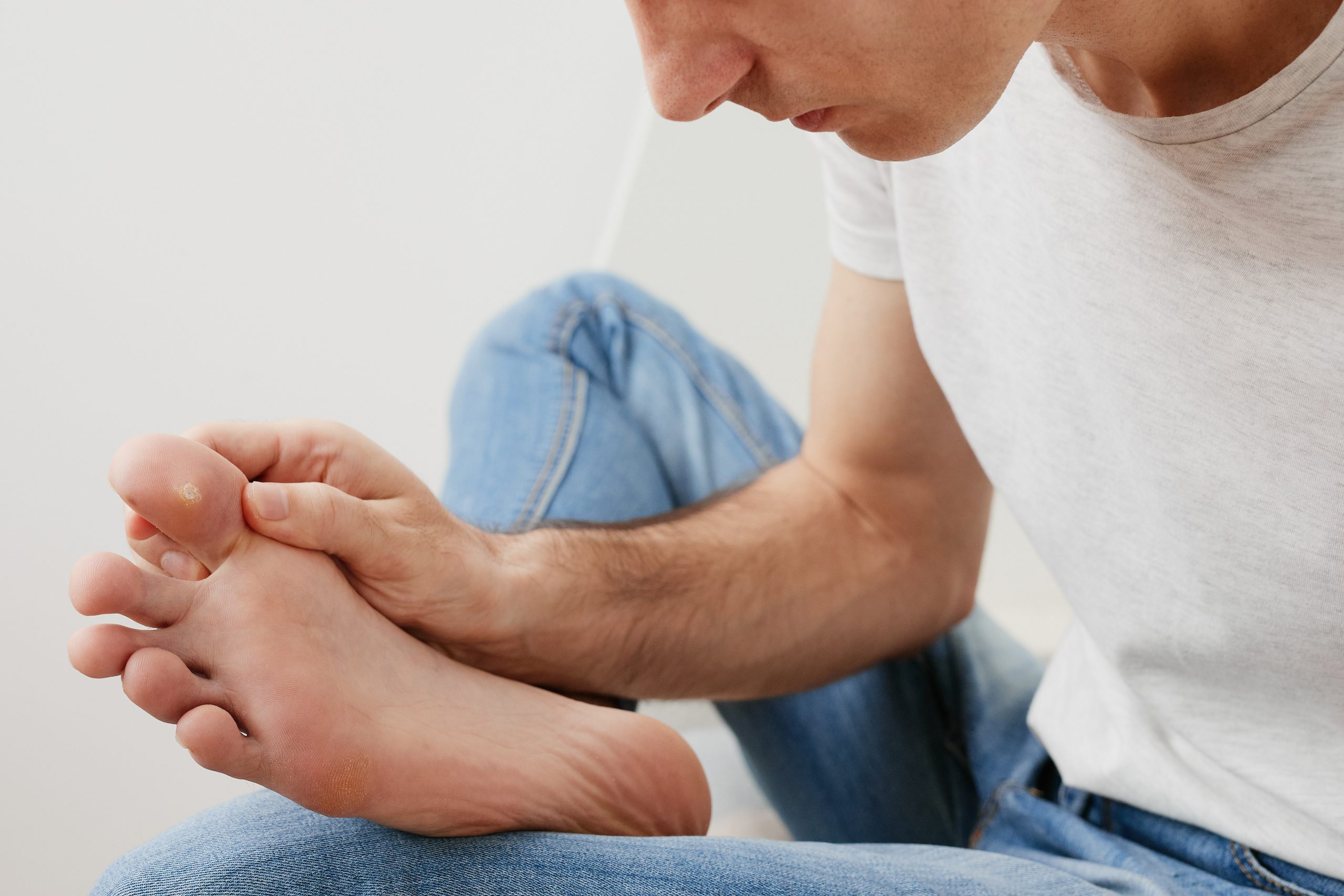
Wart removal is usually associated with mild to moderate discomfort rather than significant pain, and most people find the brief sensations during treatment manageable — especially compared to the relief of finally eliminating a stubborn wart. The level of discomfort depends on the method used, the wart’s location, and your individual pain threshold. At Elite Foot and Ankle, the podiatrists use two primary approaches — cantharidin application and Swift® microwave therapy — both designed to treat plantar warts effectively while keeping discomfort minimal. If you’ve been putting off treatment because you’re worried about pain, this guide answers “Is Wart Removal Painful? What to Expect After Treatment” and explains what you can expect after your procedure.
Plantar warts are small, rough growths caused by the human papillomavirus (HPV) that embed themselves into the skin on the bottom of your feet. Because you walk on them every day, they’re pushed deeper into the skin by body weight — making them stubborn to treat and often resistant to over-the-counter remedies. Understanding the different treatment methods available helps set realistic expectations around pain and recovery.
Not every wart requires the same approach. Here’s how the most widely used methods compare:
Cantharidin
A topical blistering agent derived from the blister beetle, applied directly to the wart. The application itself is painless — the solution is simply painted onto the wart and covered with a bandage. Over the following 24–48 hours, a blister forms underneath the wart, lifting it off the skin. When you return for a follow-up, the dead wart tissue is trimmed away. While the application is painless, the subsequent blister can cause a pulling, pressure, or tenderness sensation.
Swift® Microwave Therapy
Swift delivers precise, low-dose microwave energy directly into the wart through a specialized probe. This energy rapidly heats the infected cells, creating a controlled thermal response that triggers your immune system to recognize and attack the HPV virus causing the wart. Each application lasts only a few seconds.
Plantar warts are notorious for coming back. The virus lives in the skin, and if the immune system doesn’t fully clear it, the wart can regrow — sometimes in the same spot, sometimes nearby. The podiatrists at Elite Foot and Ankle evaluate each wart based on its size, depth, location, and how long it’s been present. For recurrent or resistant warts, they may recommend a series of Swift® treatments (up to four sessions) or switch between methods like cantharidin and Swift to approach the problem from different angles.
The key advantage of Swift for warts is that it works with your immune system rather than just removing tissue. By alerting the body’s immune response to the presence of HPV, Swift addresses the root cause — not just the visible growth — leading to effective, long-term resolution.
There’s very little preparation needed for a wart removal appointment. You don’t need to stop any medications or fast beforehand. A few practical tips:
Stop using over-the-counter wart treatments (salicylic acid pads, freeze-away kits) at least a week or two before your visit so your podiatrist can clearly evaluate the wart
Keep the area clean and free of any lotions or oils on the day of your procedure
Wear comfortable shoes you can easily slip on and off that won’t put excessive pressure on the treatment area afterward
Write down your history with the wart—when it appeared, what you’ve already tried, and whether it’s gotten bigger or multiplied
During your initial consultation, the podiatrist will thoroughly examine your foot, confirm the diagnosis, and discuss the treatment plan. This is the perfect time to ask any questions you have about the procedure, recovery, and what sensations to expect.
Regardless of the method chosen, the process begins with preparing the treatment site. If necessary, they may gently debride the wart, trimming away the overlying layer of dead, callused skin. This is painless and allows the treatment to penetrate the wart tissue more effectively.
For cantharidin, the appointment is quick. The podiatrist applies the solution directly to the wart and covers it with a bandage. You’ll go home and wait for the blister to form — usually within 24 hours. You’ll return for a follow-up so the dead tissue can be debrided.
For Swift® microwave therapy, the device is pressed against the wart and delivers microwave energy in rapid pulses, each lasting just two seconds. A typical session involves 3–5 applications. No anesthesia is needed. No bandages are required afterward. There’s no open wound to care for. You can put your shoes back on and walk out of the office immediately.
Here’s what patients most commonly report:
Cantharidin: No pain during application. Mild to moderate discomfort as the blister forms hours later. Some patients describe a deep ache or throbbing under the wart, especially on weight-bearing areas of the foot.
Swift®: A brief, sharp, hot sensation — often compared to a quick sting or a snap—that lasts only two to three seconds per application. The discomfort stops the moment the device is removed. Most patients are surprised by how fast it’s over.
Local anesthesia (numbing injections) is generally not needed for either cantharidin or Swift treatments.
This is the question patients ask most often, and the honest answer is: it depends on the method, but it’s rarely as bad as people expect. Here’s a practical comparison:
The two methods most frequently used at Elite Foot and Ankle — cantharidin and Swift — sit at the lower end of the discomfort scale. Swift, in particular, stands out because there’s no wound created, no tissue destroyed on the surface, and no recovery downtime.
During: The application is completely painless. You will feel nothing as the liquid is painted on.
After: Discomfort typically begins several hours later as the blister forms. The level of soreness depends on the size and location of the blister. A blister on the sole of the foot may be more tender when walking. The pain is generally manageable with over-the-counter pain medication and usually subsides within a day or two as the blister fluid is reabsorbed or drained.
During: Patients report a brief, sharp, hot feeling that lasts for two to three seconds per application. Most people tolerate this very well, even children. Because it’s so quick, the discomfort is fleeting.
After: Once the application is over, any discomfort vanishes almost immediately. There is no lingering pain, no wound, and no need for special dressings. You can put on your shoes and resume all normal activities — including running or swimming — right away.
Not everyone experiences wart removal the same way. Several factors influence how much discomfort you’ll feel and how quickly you’ll heal.
Plantar warts on the ball of the foot or heel tend to be more sensitive during treatment because these areas bear the most weight. Warts between the toes or on the arch may cause less discomfort. This is a common source of heel pain and discomfort. If you’re dealing with other foot pain conditions, your podiatrist will factor that into treatment planning.
Wart Size and Depth
Swift therapy creates no wound at all, which is one reason many patients prefer it.
The Patient’s Immune Status and Overall Health
Your immune system plays a central role in clearing HPV. Patients with weakened immune systems — whether from medications, chronic illness, or other factors — may need more treatment sessions and may experience slower resolution. Conditions that affect circulation or immune function, such as diabetes or peripheral neuropathy, can slow the healing process.
Other Factors That Can Delay Healing
Smoking, which restricts blood circulation
Poor nutrition
Repeatedly traumatizing the treated area by walking excessively or wearing tight shoes too soon after treatment
Proper aftercare is just as important as the treatment itself for ensuring a smooth recovery, preventing infection, and achieving the possible outcome.
After cantharidin application:
Leave the bandage in place as directed (usually 24 hours)
Expect a blister to form — this is the treatment working
Do not pop or puncture the blister
If the blister pops on its own, clean the area with soap and water, apply an antibiotic ointment, and cover it with a fresh bandage
Keep the area clean and dry
Over-the-counter pain relievers can help if the blistering causes discomfort
Return for your scheduled follow-up so the dead tissue can be properly removed
After Swift® treatment:
No bandage, no wound care needed
You can shower, exercise, and wear your normal shoes immediately
The treated area may feel slightly tender for a few hours, but most patients report no aftereffects at all
Return for follow-up treatments as scheduled (Swift treatments are spaced several weeks apart, with a maximum of four sessions)
The timeline varies depending on the method:
Cantharidin: The blister lifts the wart from the underlying skin over 1–2 weeks. At your follow-up appointment, the dead wart tissue is trimmed. If any wart remains, another treatment may be applied. Most patients need two to four sessions.
Swift®: There’s no immediate visible change — and that’s by design. Swift works by activating your immune system against the virus, so the wart gradually shrinks and resolves over weeks to months. Patients typically undergo 3–4 treatments spaced about a month apart. Some notice changes after the second or third treatment.
The side effects you might experience are generally mild and temporary:
Blistering (cantharidin) — expected and part of the treatment process
Tenderness or soreness at the treatment site — usually resolves within a few days
Redness or swelling — normal inflammatory response
Mild bleeding when dead tissue is debrided at follow-up — brief and controlled by your podiatrist
Temporary difficulty walking comfortably — especially if the wart is on a weight-bearing surface; switching to a roomier shoe for a few days can help
To manage discomfort:
Use over-the-counter pain relievers like ibuprofen or acetaminophen as recommended by your provider
Apply a cold pack (wrapped in a thin towel) to the area for 15–20 minutes at a time to reduce swelling
Elevate your foot to minimize swelling
If you experience spreading redness, pus, increasing pain after the first few days, or fever, contact Elite Foot and Ankle right away, as these could indicate infection.
Once the wart has been resolved, the new skin underneath will be tender and pink. To protect it:
Moisturize the area with a gentle, fragrance-free lotion to keep the new skin supple
Avoid picking or scratching at healing tissue — this increases the chance of scarring and reinfection
Wear moisture-wicking socks to keep the area dry, since HPV thrives in warm, moist environments
Apply sunscreen (SPF 30 or higher) to the healing area if it’s on the top of the foot or toes once the skin has fully closed — sun exposure on new scar tissue can cause it to darken permanently
Use silicone-based scar sheets or gel if your podiatrist recommends them
If you’re also managing other foot conditions like ingrown toenails, talk to your podiatrist about coordinating care so you’re not dealing with multiple healing sites at once.
Since warts are caused by a virus, there is always a chance they can return. The Swift system is particularly effective at reducing recurrence because it teaches your immune system to recognize and fight the HPV virus. Additional prevention tips:
Avoid walking barefoot in communal areas like pools, locker rooms, and public showers —consider using shower sandals
Maintain good foot hygiene and keep feet dry
Address any new growths promptly before they have a chance to spread
Consider using shower sandals in public wet areas to prevent reinfection
Pain during treatment is brief and manageable. Cantharidin is painless at application; Swift® involves a two-to-three-second sting per pulse. Neither requires anesthesia.
Recovery depends on the method. Swift has essentially zero downtime. Cantharidin involves blister care for a few days.
Multiple sessions are normal. Most plantar warts need two to four treatments regardless of the method. Swift is capped at four sessions at Elite Foot and Ankle.
Your immune system is your ally. Swift therapy specifically leverages your body’s immune response to clear HPV, which is why it’s effective for recurrent warts that haven’t responded to surface-level treatments.
Aftercare is straightforward. Keep the area clean, don’t pop blisters, and follow up as scheduled.
Don’t wait months (or years) to address a plantar wart. While warts aren’t dangerous, they can grow, multiply, and become increasingly painful when left untreated — especially on weight-bearing areas of the foot. You should see a podiatrist if:
Your wart has been present for more than a few months
Over-the-counter treatments haven’t worked
The wart is painful when you walk or stand
You notice multiple warts developing (mosaic warts)
You have diabetes, neuropathy, or a compromised immune system
You’re not sure whether the growth is actually a wart (calluses and corns can look similar)
Elite Foot and Ankle offers both cantharidin and Swift® microwave therapy for plantar wart treatment across six locations in the Portland metro area.
Is Wart Removal Painful? What to Expect After Treatment comes down to this: discomfort is brief and manageable, aftercare is simple, and both cantharidin and Swift® microwave therapy are designed for effective, long-term results. If a plantar wart has been slowing you down, a short appointment is all it takes to start the process.

About the Author
Daniel McManus, DPM
Check Your Insurance Coverage
Testimonials
I can't recommend them enough!

June 10, 2026